How to Learn Bird Songs Without an App: Six Ear-Training Exercises
There's a particular frustration that comes with standing in a spring wood full of singing birds and hearing only "chirping." You know the birds are there. You just can't tell them apart. Ear identification is a learnable skill rather than a gift, and the fastest way to build it isn't an app that names the sound for you. It's training your own memory with a few deliberate exercises. Do these six, a little at a time, and the wall between you and the dawn chorus starts to come down.
Exercise 1: Learn Five Local Birds Cold
The instinct is to learn everything at once. Don't. Pick five birds you hear often — the ones in your yard, on your block, along your regular walk. In the East that might be Northern Cardinal, American Robin, Blue Jay, Black-capped Chickadee, and Mourning Dove. In the West, maybe House Finch, Bewick's Wren, Spotted Towhee, Anna's Hummingbird, and American Crow. Which five you choose matters far less than how well you know them.
Spend a week on those five and nothing else. Listen to reference recordings — the Macaulay Library and xeno-canto both have free archives — then go outside and wait for the real thing. Repetition with a tiny target list beats scattered exposure to two hundred species. When those five are automatic, add five more.
Exercise 2: Build Mnemonics You Actually Remember
Mnemonics work, but borrowed ones fall flat. The classic "Who cooks for you?" sticks for a Barred Owl because the rhythm fits the bird. If a phrase doesn't land for you, invent your own, and don't worry about being clever. A few reliable starting points:
- Northern Cardinal: a clear "cheer, cheer, cheer" or "what-cheer, what-cheer"
- American Robin: "cheerily, cheer-up, cheerio"
- Black-capped Chickadee: a whistled "fee-bee," the second note lower
- White-throated Sparrow: "Oh-sweet-Canada-Canada"
- Tufted Titmouse: "peter-peter-peter"
- Barred Owl: "Who cooks for you? Who cooks for you-all?"
Say the mnemonic out loud the moment you hear the bird. Speaking it engages a different kind of memory than hearing it does. Keep a running note — on paper or on your phone — with the bird, the phrase, and the date you finally matched the two.
Exercise 3: Sort Calls by Shape
Species lists are endless; sound shapes are not. Before you try to name a bird, describe it. Most bird sounds fall into a handful of broad families:
- Whistles: smooth and tonal, with no roughness. Chickadee fee-bee, cardinal, orioles.
- Trills: one note repeated fast enough to blur. Chipping Sparrow, Dark-eyed Junco, Spotted Towhee.
- Buzzes: a harsh, insect-like drone. Blue-winged, Prairie, and Golden-winged Warblers.
- Chips and ticks: short, sharp single notes. Nearly every bird has one, and they are the hardest part of the craft.
- Rattles and chatters: Belted Kingfisher, Red-bellied Woodpecker, Barn Swallow.
- Two-parted or rising phrases: the "pee-a-wee" of an Eastern Wood-Pewee, the "here I am, where are you?" of a Red-eyed Vireo.
When something unknown starts singing, ask first: whistle, trill, buzz, or chip? Then narrow it. Rising or falling? Steady or erratic? Fast or slow? Answering those questions eliminates whole categories before you have any idea what species you're hearing.
Exercise 4: The Daily Ten-Minute Listen
Consistency beats intensity. Ten minutes outdoors every day will teach you more than one long outing a month. Dawn in spring is the richest hour, but dusk in fall works, and a lunchtime walk gives you something. Here's a drill to run:
- Stand still somewhere you can hear a few birds. Cup your hands behind your ears to funnel the sound forward.
- For the first two minutes, identify nothing. Just count how many distinct sounds are happening.
- Pick one and describe it aloud in plain words: "high, thin, repeated, speeding up."
- Find the singer with your eyes. Matching a sound to the bird that made it is what wires the memory in.
- Write it down, even if the entry says only "chip, unknown."
A running list of sounds you can't identify yet is your syllabus. Treat it that way and it stops feeling like failure.
Exercise 5: Sing It Back Yourself
Sound memory is physical as well as auditory. Whistling, humming, or singing a phrase back forces you to hold its shape long enough to notice what you got wrong. When a cardinal sings, whistle it back immediately. If you can't whistle, hum it, or repeat the mnemonic in the same rhythm. Did your version rise where the bird's falls? Is the gap between notes the same?
Most people find the mismatches embarrassingly obvious, which is exactly the point — you're hearing detail you'd been sliding past. Do this until three or four local songs are easy, then try something harder, like the long, rambling phrases of a Red-eyed Vireo. Singing that one back is a workout.
Exercise 6: Test Yourself Blind
Once you know a handful of birds, test yourself without your eyes. Go to a patch you know well, drop your gaze or close your eyes, and try to name ten birds in a row before looking at any of them. Keep score. The misses are the useful part.
Two variations are worth trying. Sound mapping: with eyes shut, point toward each sound and mark it on a rough sketch of the area. You'll start to see how birds move, and where one territory ends and the next begins. The one-species walk: choose a single bird and note every time you hear it. How far apart are its songs? Is it moving? When does it go quiet?
If you want to draw a bird in for a look, a brief burst of playback can help, but use it sparingly, keep the volume low, and skip it during nesting season. No song is worth adding stress to a bird already raising young.
Making It Stick
This builds over months, not weekends, and it builds unevenly. Then one spring morning you'll pick a Blue-headed Vireo out of a mixed chorus without thinking about it at all. Keep a sound journal. Revisit your own recordings if you make them. Stay with the five-birds-at-a-time approach and let each season add its own voices. The reward isn't a longer list. It's stepping outside and hearing a neighborhood instead of a blur.
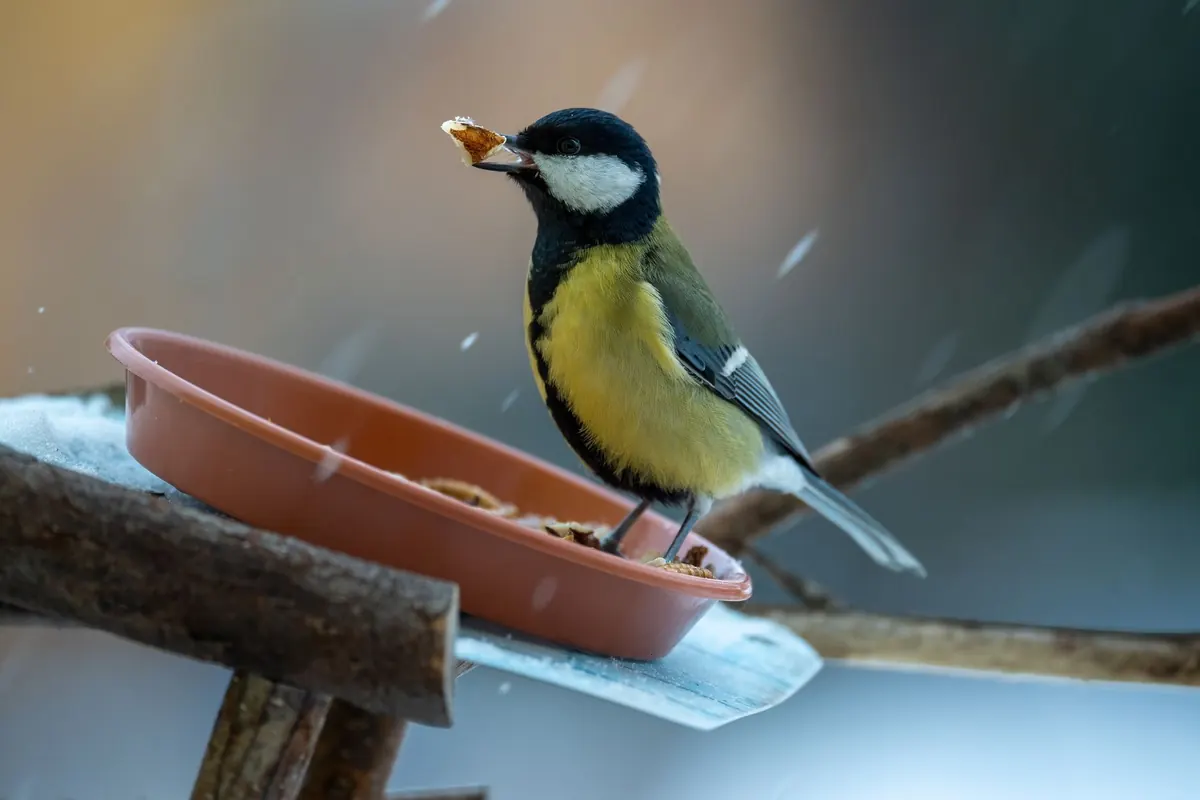
Photo: Burst / Pexels